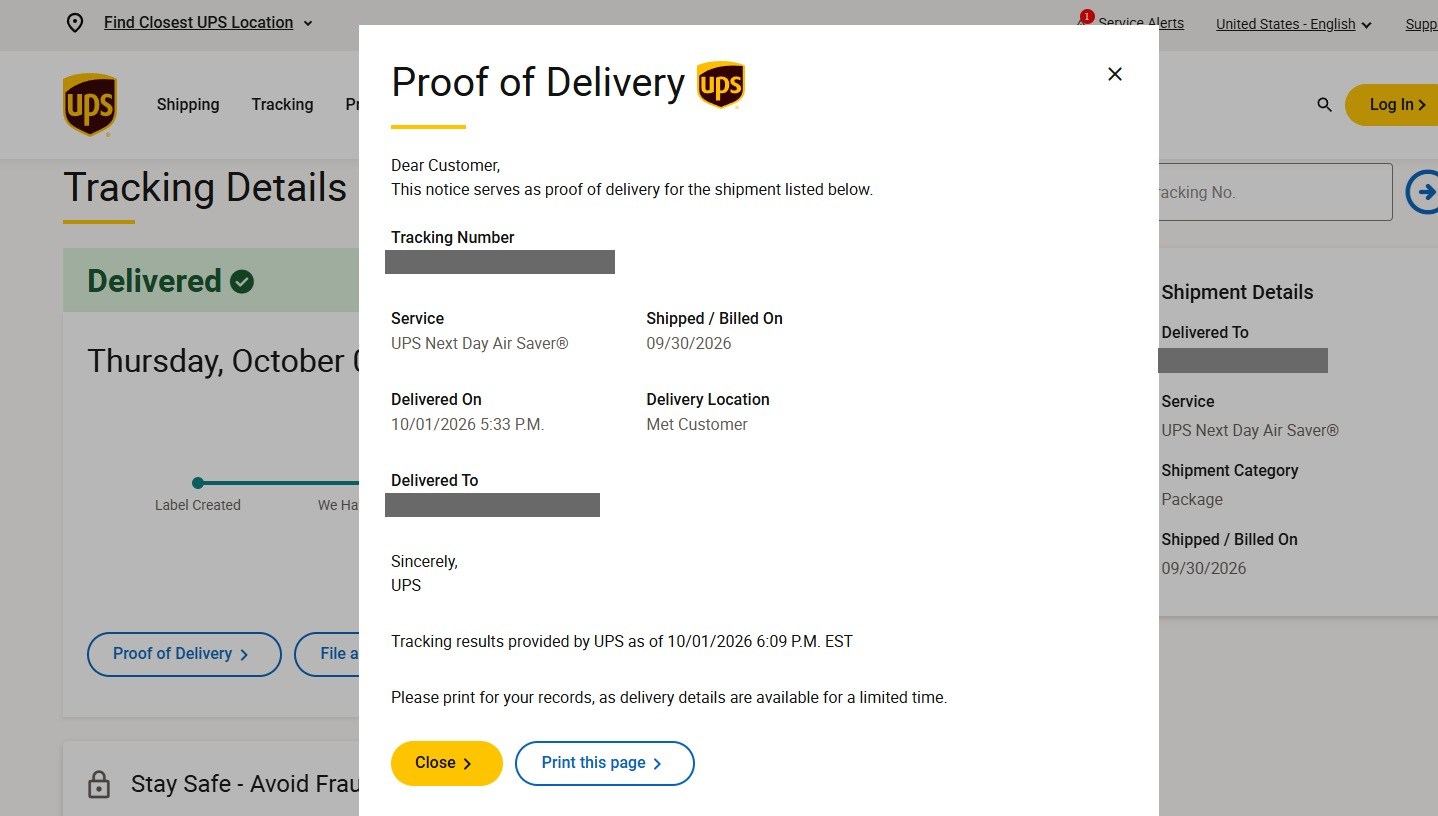
Delivered
Michigan
Destination state
Carrier-confirmed deliveryThe supplied tracking record shows this shipment as delivered.
Recipient details withheld
A medically reviewed guide to brand-name cash prices, online program fees, coverage, savings options, compounded-product concerns, and total treatment cost.

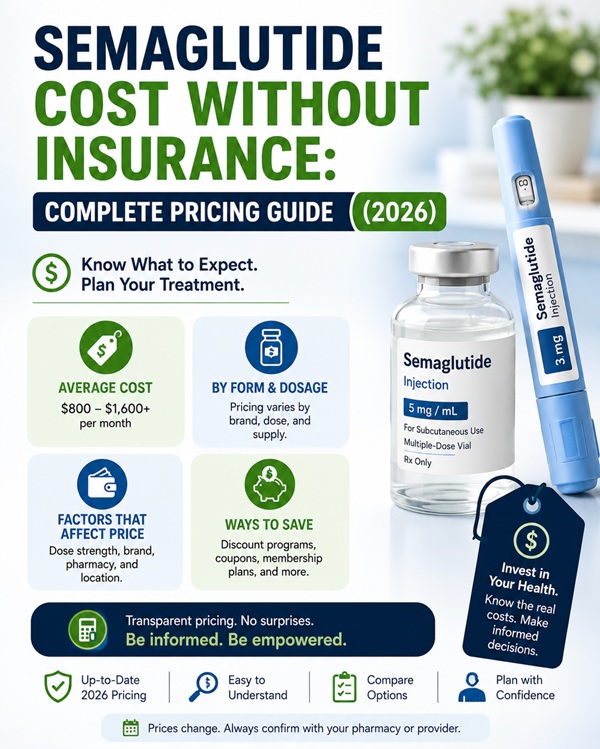
This article has been medically reviewed and approved by Dr. Fremlin Dekyi, MD, to support clinical accuracy and patient-friendly education about semaglutide costs. Prices, coverage, discounts, product availability, and compounding rules change; verify current information before treatment.
Cash cost varies by the prescribed FDA-approved product, pharmacy, dose, location, program fees, and savings eligibility. Brand-name products may cost roughly $900-$1,500 or more per month before discounts, while telehealth fees and testing may be separate. Published ranges are only estimates: patients should obtain a current pharmacy quote and a complete program cost breakdown.
Semaglutide is the active ingredient in several products with different FDA-approved indications, dosage forms, and prices. Wegovy, Ozempic, and Rybelsus are not interchangeable simply because they contain semaglutide.
The total out-of-pocket cost can include medication, consultations, membership fees, laboratory testing, follow-up care, prescription management, supplies, and shipping. The lowest advertised monthly number may not represent the complete cost.
Cost decisions should be considered alongside evidence, approved indication, safety, and realistic expectations.
In STEP 1, adults with obesity or overweight without diabetes who received semaglutide 2.4 mg plus lifestyle intervention lost about 15% of body weight on average over 68 weeks.
The trial studied a specific product dose and population. Results vary and should not be used to guarantee an outcome from every semaglutide product or program.
Semaglutide is a GLP-1 receptor agonist that influences appetite, fullness, digestion, insulin response, and blood sugar. Different branded products use semaglutide for different approved purposes.
| Product | Form | Primary relevant FDA use |
|---|---|---|
| Wegovy | Weekly injection | Chronic weight management and another product-specific cardiovascular indication |
| Ozempic | Weekly injection | Type 2 diabetes and other product-specific risk-reduction indications; not approved specifically for chronic weight management |
| Rybelsus | Oral tablet | Type 2 diabetes; not approved specifically for chronic weight management |
Patients paying cash generally face the highest prices. The ranges below reflect broad published or commonly advertised estimates and are not live quotes. Pharmacy prices, package duration, dose, manufacturer pricing, and availability can change.
| Treatment or service | Illustrative monthly range | What to confirm |
|---|---|---|
| Brand-name Wegovy | $1,000-$1,500+ | Current pharmacy cash price, package duration, and savings eligibility |
| Brand-name Ozempic | $900-$1,400+ | Approved indication, current pharmacy price, and savings eligibility |
| Brand-name Rybelsus | $800-$1,200+ | Dose, tablet quantity, current pharmacy price, and indication |
| Online weight-loss program | $150-$500+ before or with varying medication terms | Whether medication, visits, testing, supplies, and shipping are included |
Pricing reflects many factors, including research and development, clinical trials, regulatory work, manufacturing, quality controls, supply, distribution, demand, negotiated rebates, and the U.S. insurance and pharmacy-benefit system.
The listed cash price does not necessarily equal what an insurer, employer plan, pharmacy-benefit manager, or eligible patient ultimately pays.
Telehealth programs may charge separately for evaluation, membership, follow-up, testing, and medication, or may bundle some services. An advertised price should clearly identify the drug, dose, pharmacy, quantity, and services included.
| Program component | Illustrative range | Questions to ask |
|---|---|---|
| Consultation only | $50-$150+ | Is follow-up included and is the provider licensed in my state? |
| Medical weight-loss membership | $99-$300+ monthly | Which visits, messages, refills, and coaching are included? |
| Medication plus care plan | $150-$500+ advertised by some programs | Which exact product is supplied, and are testing and shipping included? |
The prescribed product and pharmacy often have the largest effect, but program structure and ongoing clinical needs also matter. Higher dose does not always change a brand pen package’s retail price in a simple linear way, so patients should request a dose-specific quote.
Compounded semaglutide products are not FDA-approved. FDA does not review them for safety, effectiveness, or quality before marketing. Federal law generally restricts compounding products that are essentially copies of commercially available drugs, with limited circumstances and rules that can change with drug-shortage status.
Patients should not assume an advertised compounded product is the same as Wegovy or Ozempic. FDA has warned about dosing errors, fraudulent products, quality concerns, and the use of semaglutide salt forms that differ from the active ingredient in approved products.
If compounding is legally and clinically appropriate for a specific patient, verify the prescriber, pharmacy license, exact ingredient, concentration, dosing units, storage, testing, adverse-event process, and total cost. Price should not be the only consideration.
| What to verify | Why it matters |
|---|---|
| FDA approval status | Compounded products are not FDA-approved |
| Licensed pharmacy | Confirms state oversight and a traceable dispenser |
| Semaglutide base vs salt form | Salt forms are different active ingredients from those used in approved products |
| Concentration and dosing units | Variation can contribute to serious dosing errors |
| Current legal availability | Compounding permissions can change with shortage status and applicable law |
A complete estimate should include every recurring and one-time charge. Patients should ask whether fees continue if medication is unavailable, denied by insurance, paused because of side effects, or stopped.
| Potential charge | Examples |
|---|---|
| Clinical care | Initial evaluation, follow-up, messaging, refill review |
| Testing | Laboratory work or other monitoring when clinically indicated |
| Medication | Product, dose, quantity, pharmacy dispensing fee |
| Supplies and delivery | Needles where applicable, insulated shipping, delivery fees |
| Administrative costs | Membership, cancellation, prior-authorization, or platform fees |
Weight change depends on product, dose, duration, adherence, starting weight, nutrition, activity, medical conditions, and individual response. The examples below show 15% of starting weight and are not guaranteed results.
| Starting weight | 15% of starting weight |
|---|---|
| 200 lbs | 30 lbs |
| 250 lbs | 37.5 lbs |
| 300 lbs | 45 lbs |
For an FDA-approved chronic weight-management indication, adults commonly qualify with a BMI of 30 or higher, or BMI 27 or higher with at least one weight-related condition. Product-specific criteria, contraindications, and individual medical review apply.
Ozempic and Rybelsus have different approved indications. A provider should select a product based on diagnosis and medical need rather than cost alone.
Brand-name semaglutide and tirzepatide products can both have high cash prices. Comparative value depends on the approved indication, expected benefit, tolerability, coverage, savings eligibility, and total care cost.
| Feature | Semaglutide products | Tirzepatide products |
|---|---|---|
| Brand-name cash cost | Typically high; verify current product price | Typically high; verify current product price |
| Weight-management brand | Wegovy | Zepbound |
| Type 2 diabetes brand | Ozempic or Rybelsus | Mounjaro |
| Online availability | Varies by program, state, and clinical eligibility | Varies by program, state, and clinical eligibility |
Savings options have eligibility restrictions and can change or end. Patients should confirm terms directly with the manufacturer, insurer, pharmacy, or program before relying on a quoted amount.
Coverage depends on the specific product, diagnosis, plan formulary, employer benefit, prior authorization, and medical-necessity criteria. A plan may cover Ozempic for a qualifying type 2 diabetes indication while excluding Wegovy under an obesity-medication exclusion.
Confirm both the medication benefit and any telehealth, laboratory, or follow-up costs. Coverage approval should be obtained before assuming a particular monthly amount.
Compare the exact product, pharmacy, clinician access, monitoring plan, cancellation terms, refill process, and total monthly cost. A very low headline price may exclude medication or apply only to an introductory dose or first month.
Avoid sellers that offer semaglutide without a prescription, hide the dispensing pharmacy, guarantee approval, use unclear ingredients, or provide no way to contact a licensed clinical team.
Wegovy uses gradual dose escalation. Patients typically start at a lower dose and increase over several months until reaching a maintenance dose if tolerated and clinically appropriate.
Cash prices do not always rise in a simple dose-by-dose pattern, but dose still matters because the prescribed strength, package, refill timing, and pharmacy quote determine what the patient actually pays.
| Typical Wegovy dose step | Common treatment role | Cost consideration |
|---|---|---|
| 0.25 mg weekly | Starter dose | Often used for the first month; ask whether introductory program pricing changes later. |
| 0.5 mg weekly | Escalation dose | Patients may still be adjusting; verify refill price and side-effect support. |
| 1.0 mg weekly | Escalation dose | Costs may remain similar to other pen packages, but pharmacy quotes should be dose specific. |
| 1.7 mg weekly | Escalation or maintenance option for some patients | Some patients remain here if clinically appropriate and tolerated. |
| 2.4 mg weekly | Usual maintenance dose | Long-term affordability becomes most important because treatment may continue for months or longer. |
Starter dosing may feel less expensive if a program offers an introductory price, but patients should ask what the monthly cost becomes at later doses and after any promotional period ends.
Maintenance dosing is where long-term affordability matters most. Patients should budget for recurring medication, follow-up, monitoring, and possible dose-adjustment visits rather than only the first month.
| Treatment phase | Typical patient question | What to verify |
|---|---|---|
| Starter phase | What will my first month cost? | Consultation fee, first prescription cost, shipping, supplies, and whether the price is promotional. |
| Dose escalation | Will my cost change each month? | Dose-specific pharmacy quote, refill timing, side-effect visit fees, and membership terms. |
| Maintenance phase | Can I afford this long term? | Recurring medication cost, follow-up schedule, insurance status, savings eligibility, and alternatives. |
Semaglutide budgeting should look beyond one refill. Patients may need to plan for the first month, three months, six months, and twelve months of treatment, especially if they are paying cash.
The table below is a budgeting framework rather than a price quote. Exact costs depend on product, pharmacy, program, insurance status, dose, labs, and follow-up needs.
| Timeline | Common costs to plan for |
|---|---|
| First month | Initial visit, eligibility review, prescription, possible lab work, first refill, supplies, and shipping. |
| Three months | Dose escalation, follow-up visits, refill management, side-effect support, and repeated medication costs. |
| Six months | Ongoing maintenance or dose adjustment, progress review, possible labs, and affordability reassessment. |
| Twelve months | Annual medication cost, long-term monitoring, insurance reauthorization, and maintenance planning. |
For cash-paying patients, annual cost can become substantial. A medication that seems manageable for one month may be harder to sustain over six to twelve months.
Before starting, patients should ask what happens if the medication becomes unavailable, insurance coverage changes, savings programs end, side effects require a pause, or the treatment plan changes.
Insurance coverage for semaglutide depends on the exact product, diagnosis, plan formulary, employer benefits, BMI documentation, medical-necessity criteria, and prior authorization requirements.
A plan may cover Ozempic for a qualifying type 2 diabetes diagnosis while excluding Wegovy for weight management. Patients should verify the product-specific benefit before assuming coverage.
| Approval step | What usually happens |
|---|---|
| Benefit check | Confirm whether the plan covers Wegovy, Ozempic, Rybelsus, or another product for the relevant diagnosis. |
| Clinical documentation | Provider documents BMI, health conditions, medical history, previous attempts, and treatment rationale. |
| Prior authorization | The provider submits required forms and records for insurer review. |
| Insurer decision | The plan approves, denies, requests more information, or requires an alternative step first. |
| Appeal or alternative plan | If denied, the care team may discuss appeals, extra documentation, or other treatment options. |
Many plans use criteria similar to FDA-approved chronic weight-management indications, but each insurer can apply its own rules. Documentation must be accurate and complete.
| Insurance topic | Common requirement or issue |
|---|---|
| BMI 30 or higher | Often supports eligibility for chronic weight-management medication review. |
| BMI 27 or higher with a condition | May qualify when a weight-related condition such as hypertension, sleep apnea, high cholesterol, prediabetes, type 2 diabetes, or cardiovascular disease is documented. |
| Common denial: plan exclusion | Some employer plans exclude obesity medications regardless of medical need. |
| Common denial: incomplete records | Missing BMI, diagnosis, previous treatment history, or provider notes can delay or prevent approval. |
| Common denial: wrong product/diagnosis match | A diabetes product and weight-management product may have different coverage rules. |
Major insurers may cover semaglutide products under some plans and deny them under others. The employer benefit design, formulary, diagnosis, prior authorization rules, and pharmacy network often matter more than the insurance company name alone.
Patients should ask the insurer for the medication tier, prior authorization criteria, step-therapy requirements, estimated copay or coinsurance, deductible impact, and reauthorization rules.
Many patients compare semaglutide, Wegovy, and Ozempic as if they are the same product. Semaglutide is the active ingredient; Wegovy and Ozempic are different brand-name products with different approved uses and coverage pathways.
| Product or term | What it is | Cost and coverage consideration |
|---|---|---|
| Semaglutide | Active ingredient | Cost depends on the specific product or preparation, not the ingredient name alone. |
| Wegovy | Semaglutide brand approved for chronic weight management in eligible patients | Often reviewed under obesity-medication benefits; cash prices may be high without coverage. |
| Ozempic | Semaglutide brand approved for type 2 diabetes and related uses | Coverage is commonly tied to diabetes criteria; not approved specifically for chronic weight management. |
| Rybelsus | Oral semaglutide product for type 2 diabetes | Different dosage form and indication; coverage differs from Wegovy. |
| Compounded semaglutide | Custom compounded preparation when legally and clinically appropriate | Not FDA-approved; lower advertised price does not prove equivalence, quality, or legality. |
Some patients consider compounded semaglutide because of cost or access issues. Compounded products are not FDA-approved, and FDA does not evaluate them for safety, effectiveness, or quality before marketing.
Patients should verify the pharmacy license, exact ingredient, concentration, dosing units, storage instructions, adverse-event process, and whether compounding is currently permitted for the circumstances. Avoid any seller offering semaglutide without appropriate medical evaluation and prescription oversight.
Whether semaglutide is worth the cost depends on medical benefit, safety, affordability, treatment goals, side effects, and the ability to maintain treatment long enough to benefit.
Potential value may include appetite reduction, meaningful weight loss for some patients, improved mobility, better metabolic health markers, improved confidence, or reduced weight-related health risks. These outcomes vary and are not guaranteed.
| Patient scenario | Value discussion |
|---|---|
| BMI 32 with hypertension and Wegovy coverage approved | Out-of-pocket cost may be manageable, and weight reduction may support broader health goals. |
| Cash-paying patient quoted a high monthly price | Long-term affordability should be reviewed before starting to avoid stopping early for cost reasons. |
| Patient with type 2 diabetes and obesity | A provider may compare diabetes-approved semaglutide options, weight goals, glucose control, and insurance criteria. |
| Patient considering a compounded product | Lower advertised cost must be weighed against FDA approval status, pharmacy quality, legality, dosing accuracy, and clinical oversight. |
The financial value of treatment is not only the number on the pharmacy receipt. Patients may also consider mobility, energy, sleep, blood pressure, glucose control, medication burden, confidence, and ability to sustain lifestyle changes.
At the same time, a treatment that cannot be sustained financially may not be the best practical choice. A provider can help compare semaglutide with other evidence-based weight-management options.
Patients usually get more value from medical review, fit assessment, and follow-up planning than from choosing a medication based only on headlines or social posts.
See some of the completed delivery confirmations shared by Doko Medical.
Destination state
Recipient details withheld
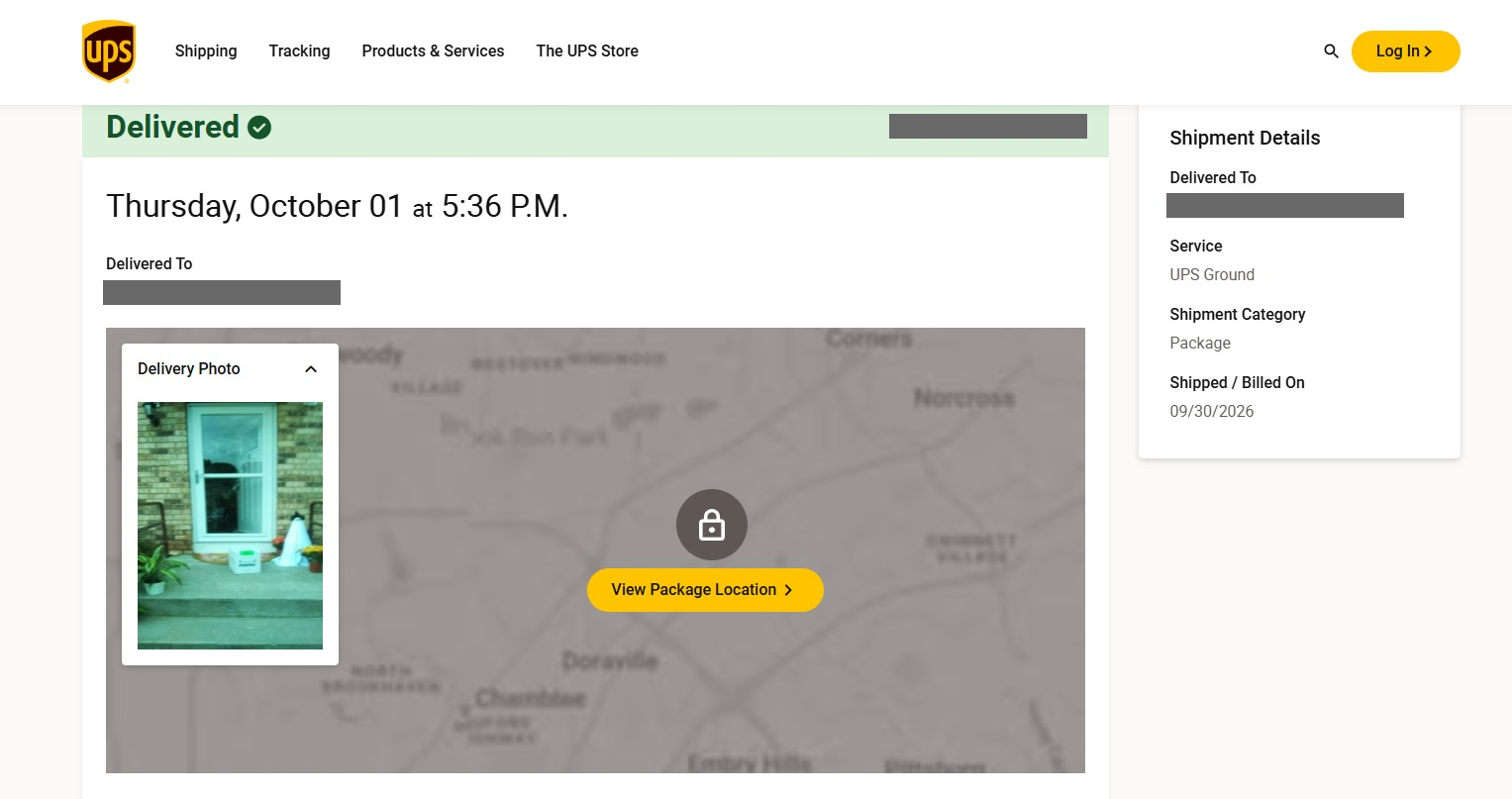
Destination state
Recipient details withheld
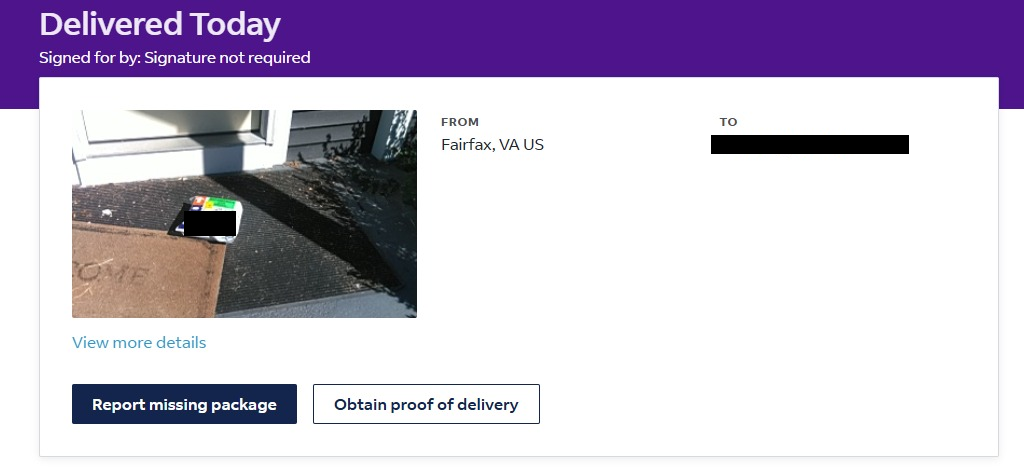
Destination state
Recipient details withheld
Destination state
Recipient details withheld
Destination state
Recipient details withheld