This article has been medically reviewed and approved by Dr. Fremlin Dekyi, MD, to support clinical accuracy and patient-friendly education about semaglutide products. This content is educational and does not replace personalized advice from a licensed healthcare provider.
Are semaglutide, Wegovy, and Ozempic the same?
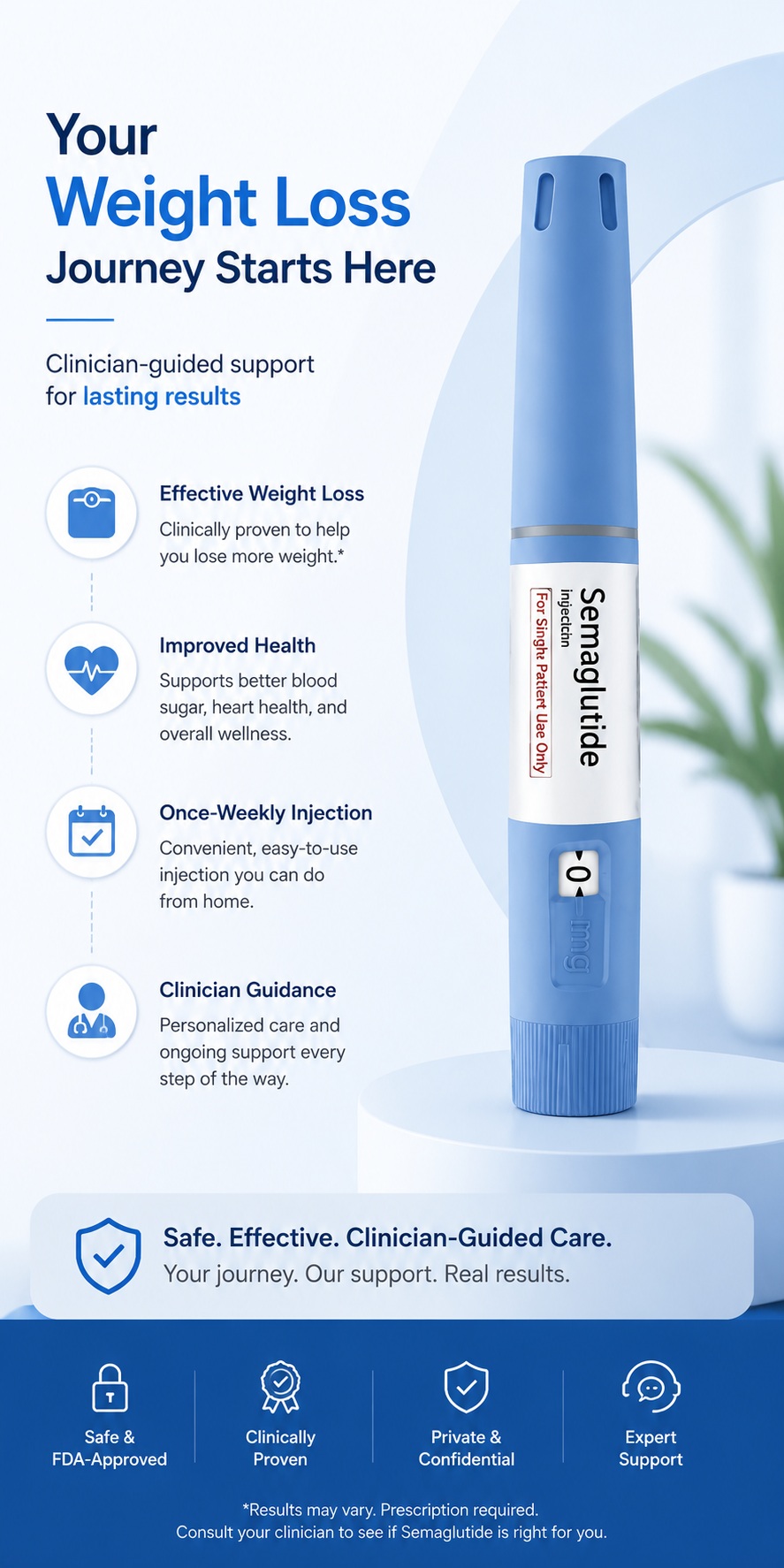
Semaglutide is the active medication ingredient. Wegovy is a brand-name semaglutide product FDA-approved for chronic weight management in eligible patients, while Ozempic is a brand-name semaglutide product FDA-approved for type 2 diabetes and certain related risk-reduction indications. Their approved uses and dosing differ.
Many patients are surprised to learn that semaglutide, Wegovy, and Ozempic are closely related. Wegovy contains semaglutide, and Ozempic contains semaglutide.
The primary differences involve FDA-approved uses, dosage schedules, insurance coverage, weight-management indications, and cost. Patients comparing semaglutide vs Wegovy, semaglutide vs Ozempic, or Ozempic for weight loss are often comparing different products or uses of the same active ingredient.
Clinical Evidence for Semaglutide
Semaglutide has substantial clinical evidence in both chronic weight management and type 2 diabetes care.
The STEP 1 Trial
The landmark STEP 1 trial studied adults with overweight or obesity who did not have diabetes. Participants receiving once-weekly semaglutide 2.4 mg plus lifestyle intervention lost about 15% of their body weight on average over 68 weeks.
Researchers also observed improvements in cardiometabolic risk factors. Individual results vary, and trial results do not guarantee a particular outcome.
Understanding Semaglutide
Semaglutide belongs to a class of medications called GLP-1 receptor agonists. GLP-1 stands for glucagon-like peptide-1, a hormone involved in appetite, blood sugar, insulin response, digestion, and feelings of fullness.
By acting like natural GLP-1, semaglutide may reduce hunger and food cravings, improve blood sugar control, and support gradual weight loss when combined with an appropriate care plan.
- Reduced hunger
- Less food craving
- Improved blood sugar control
- Greater feelings of fullness
- Gradual weight loss
What Is Wegovy?
Wegovy is a prescription medication containing semaglutide. It is FDA-approved for chronic weight management in eligible adults and certain adolescents, and it also has an indication to reduce certain cardiovascular risks in qualifying adults.
Because Wegovy is specifically indicated for chronic weight management, insurers commonly evaluate it under obesity-medication benefits and may require prior authorization.
What Is Ozempic?
Ozempic also contains semaglutide. It is FDA-approved for adults with type 2 diabetes, with additional approved risk-reduction indications for certain patients.
Weight loss is commonly observed during treatment, but Ozempic is not FDA-approved specifically as a chronic weight-management medication. A clinician should determine which product and indication fit a patient’s medical needs.
Semaglutide vs Wegovy
Wegovy is not a different active ingredient: it is a specific branded semaglutide product. The distinction lies mainly in the product, approved indication, and dosing schedule.
| Feature | Semaglutide | Wegovy |
|---|---|---|
| Active ingredient | Semaglutide | Semaglutide |
| What the name means | Medication ingredient | Brand-name product |
| FDA weight-management approval | Depends on product/formulation | Yes, for eligible patients |
| Typical route | Depends on product | Weekly injection |
Semaglutide vs Ozempic
Ozempic is a branded medication whose active ingredient is semaglutide. It was developed and approved primarily for type 2 diabetes management rather than chronic weight management.
| Feature | Semaglutide | Ozempic |
|---|---|---|
| Active ingredient | Semaglutide | Semaglutide |
| What the name means | Medication ingredient | Brand-name product |
| Type 2 diabetes approval | Depends on product/formulation | Yes |
| Chronic weight-management approval | Depends on product/formulation | No |
| Typical route | Depends on product | Weekly injection |
Wegovy vs Ozempic
Wegovy and Ozempic both contain semaglutide and are injected weekly, but they are not interchangeable prescriptions. Their FDA-approved uses, available dose strengths, dosing schedules, and insurance requirements differ.
| Feature | Wegovy | Ozempic |
|---|---|---|
| Active ingredient | Semaglutide | Semaglutide |
| FDA chronic weight-management approval | Yes, for eligible patients | No |
| FDA type 2 diabetes approval | No | Yes |
| Weekly injection | Yes | Yes |
| Appetite reduction | Common | Common |
| Insurance pathway | Often obesity/weight-management benefit | Often diabetes benefit |
Ozempic and Weight Loss Results
Ozempic may support weight loss because semaglutide can help people feel fuller longer, eat fewer calories, reduce cravings, and improve appetite regulation.
The amount of weight lost varies by dose, indication, individual response, duration of treatment, and lifestyle changes. Results from Wegovy’s 2.4 mg obesity trials should not automatically be treated as expected Ozempic results because the approved products and dosing schedules differ.
What a 15% Weight Change Looks Like
The examples below illustrate a 15% body-weight change. They are not a promise of treatment results.
| Starting weight | 15% of starting weight |
|---|---|
| 200 lbs | 30 lbs |
| 250 lbs | 37.5 lbs |
| 300 lbs | 45 lbs |
Who May Qualify for Wegovy?
Adults may commonly qualify for chronic weight-management treatment with a BMI of 30 or higher, or a BMI of 27 or higher with at least one weight-related condition. Eligibility and current label requirements should be confirmed by a healthcare provider.
- High blood pressure
- Dyslipidemia or high cholesterol
- Sleep apnea
- Prediabetes or type 2 diabetes
- Cardiovascular disease
Who May Qualify for Ozempic?
Ozempic is generally considered for adults with type 2 diabetes. Providers evaluate blood sugar levels, A1C, medical history, other medications, kidney and cardiovascular risk, and treatment goals before prescribing it.
Side Effects of Semaglutide
Because Wegovy and Ozempic contain semaglutide, their side-effect profiles overlap, although dose and individual response matter. Common effects include nausea, vomiting, constipation, diarrhea, abdominal discomfort, and reduced appetite.
Semaglutide products also carry important warnings and contraindications. Patients should review the product-specific prescribing information and discuss severe, persistent, or concerning symptoms with a healthcare professional.
Semaglutide Dosage Comparison
Although Wegovy and Ozempic both contain semaglutide, they have different FDA-approved indications and dosing schedules. Understanding these differences can help patients have a more informed conversation with their healthcare provider.
Both products are generally increased gradually to improve tolerability. A prescriber may delay escalation or choose an appropriate maintenance dose based on the product label, treatment goals, response, and side effects. Patients should follow their own prescription rather than changing a dose themselves.
| Dosing feature | Wegovy | Ozempic |
|---|---|---|
| Starting dose | 0.25 mg once weekly | 0.25 mg once weekly |
| Initial escalation | Usually every 4 weeks | After at least 4 weeks at the current step |
| Available later steps | 0.5 mg, 1 mg, 1.7 mg, and 2.4 mg | 0.5 mg, 1 mg, and 2 mg |
| Primary dosing goal | Chronic weight management or another approved Wegovy indication | Type 2 diabetes and other approved Ozempic indications |
| Highest listed weekly dose | 2.4 mg | 2 mg |
Typical Wegovy Dosing Schedule
Wegovy uses a gradual dose-escalation schedule intended to reduce gastrointestinal side effects. The table shows the standard progression in prescribing information; individual instructions may differ.
| Treatment period | Typical Wegovy dose |
|---|---|
| Weeks 1-4 | 0.25 mg once weekly |
| Weeks 5-8 | 0.5 mg once weekly |
| Weeks 9-12 | 1 mg once weekly |
| Weeks 13-16 | 1.7 mg once weekly |
| Maintenance | Typically 1.7 mg or 2.4 mg once weekly depending on indication and patient factors; 2.4 mg is the recommended adult maintenance dose for weight reduction |
Typical Ozempic Dosing Schedule
Ozempic begins with the same 0.25 mg introductory dose but has different maintenance options. The 0.25 mg dose is used for treatment initiation and is not an effective maintenance dose for glycemic control.
| Treatment period | Typical Ozempic dose |
|---|---|
| Weeks 1-4 | 0.25 mg once weekly |
| Starting at week 5 | 0.5 mg once weekly |
| If additional glycemic control is needed | May increase to 1 mg after at least 4 weeks at 0.5 mg |
| Higher maintenance option | May increase to 2 mg after at least 4 weeks at 1 mg |
Why Semaglutide Dosing Matters
Dose can influence appetite effects, blood sugar response, side-effect frequency, and treatment outcomes. The best dose depends on the diagnosis, product, treatment objective, medical history, tolerability, and provider recommendations.
The different dose ranges do not make the products interchangeable. Patients should never combine Wegovy with Ozempic or another semaglutide-containing product.
- Appetite effects
- Weight-management response
- Blood sugar effects
- Side-effect frequency
- Long-term treatment goals
Wegovy vs Ozempic Side Effects Comparison
Because both products contain semaglutide, their side-effect profiles overlap. Gastrointestinal effects are common during dose escalation and may improve as the body adjusts, but individual response varies.
Serious risks can include pancreatitis, gallbladder problems, acute kidney injury related to dehydration, severe allergic reactions, and the boxed warning concerning thyroid C-cell tumors. Product-specific warnings and contraindications should be reviewed with a healthcare professional.
Neither medication universally has fewer side effects. Treatment should be selected based on overall medical appropriateness, not side effects alone.
| Potential side effect | Wegovy | Ozempic |
|---|---|---|
| Nausea | Common | Common |
| Vomiting | Common | Common |
| Constipation | Common | Common |
| Diarrhea | Common | Common |
| Reduced appetite | May occur | May occur |
| Abdominal discomfort or pain | May occur | May occur |
| Bloating or indigestion | May occur | May occur |
Which Is Better for Weight Loss: Wegovy or Ozempic?
For eligible patients whose primary goal is chronic weight management, Wegovy is the semaglutide product specifically FDA-approved for that purpose. Ozempic may align more closely with the care plan of an eligible adult whose primary diagnosis is type 2 diabetes.
The best option is the one that is clinically appropriate, safe, accessible, and sustainable. Adherence, dose progression, nutrition, physical activity, medical history, and treatment duration all influence results.
Wegovy May Fit When
The patient meets weight-management eligibility requirements, wants treatment specifically approved for chronic weight management, and has a medically appropriate plan with access to coverage or another affordable pathway.
Ozempic May Fit When
The patient has type 2 diabetes and needs blood sugar management or another benefit covered by Ozempic’s approved indications.
Ask a Provider When
The patient has both diabetes and obesity, multiple medical conditions, unclear insurance coverage, prior side effects, or questions about changing products.
Wegovy vs Ozempic Cost Comparison
The difference between Wegovy cost and Ozempic cost depends on insurance coverage, pharmacy pricing, dosage, manufacturer savings programs, and eligibility requirements.
Without insurance, retail prices for either product can be high and may exceed $1,000 per month depending on the pharmacy and location. Because prices and savings programs change, patients should verify current costs directly with their pharmacy and insurer.
Wegovy may cost less for a patient whose employer plan covers obesity medications. Ozempic may cost less for a qualifying patient whose plan covers it for type 2 diabetes. There is no universally cheaper option.
- Prescription dosage
- Insurance coverage and deductible
- Pharmacy pricing
- Manufacturer savings eligibility
- Geographic location
| Feature | Wegovy | Ozempic |
|---|---|---|
| Active ingredient | Semaglutide | Semaglutide |
| Primary FDA use | Chronic weight management | Type 2 diabetes |
| Typical cash cost | High; verify current pharmacy price | High; verify current pharmacy price |
| Insurance coverage | Depends heavily on obesity benefits | Often tied to diabetes coverage |
| Prior authorization | Common | Common |
| Manufacturer programs | May be available to eligible patients | May be available to eligible patients |
Wegovy vs Ozempic Insurance Coverage
Insurance coverage is often a deciding factor. Wegovy coverage may require BMI documentation, a qualifying weight-related condition, prior authorization, and medical-necessity review. Coverage still depends on whether the plan includes obesity medication benefits.
Ozempic coverage is commonly linked to a type 2 diabetes diagnosis, A1C results, prior medication history, and medical-necessity documentation. Some plans cover diabetes medications while excluding medications prescribed solely for weight management.
Formularies and employer benefits change frequently. Patients with commercial plans, including plans administered by BCBS, UnitedHealthcare, Aetna, or Cigna, should confirm the current formulary and authorization criteria for their exact plan.
Medicare Coverage
Traditional Medicare generally does not cover medications when prescribed solely for weight loss. Coverage may differ when a medication is prescribed for another FDA-approved indication, and Medicare Advantage or Part D formularies vary. Patients should verify current benefits directly with their plan.
Why Insurance May Cover Ozempic but Not Wegovy
Ozempic is categorized primarily as a type 2 diabetes medication, while Wegovy is categorized as a chronic weight-management medication. A plan may offer broad diabetes coverage but limited or no obesity-medication benefits.
| Common requirement | Wegovy | Ozempic |
|---|---|---|
| Prior authorization | Frequently required | Frequently required |
| BMI documentation | Common | Usually not the primary requirement |
| Type 2 diabetes diagnosis | Not required for the weight-management indication | Often required for coverage |
| Medical-necessity review | Common | Common |
| Step therapy | Possible | Possible |
Insurance Comparison by Plan Type
The overview below is general and is not a coverage guarantee. Medicare rules, commercial formularies, employer exclusions, diagnoses, and prior-authorization criteria determine actual benefits.
Before beginning treatment, patients should verify current coverage, copays, deductibles, prior-authorization requirements, step therapy, and employer-specific exclusions.
| Plan type | Wegovy | Ozempic |
|---|---|---|
| Medicare | Limited and indication-dependent; verify the current plan | May be covered for a qualifying approved indication; verify the current plan |
| BCBS plans | Varies by plan and obesity benefit | Often indication-dependent; varies by plan |
| UnitedHealthcare plans | Varies by plan and obesity benefit | Often indication-dependent; varies by plan |
| Aetna plans | Varies by plan and obesity benefit | Often indication-dependent; varies by plan |
| Cigna plans | Varies by plan and obesity benefit | Often indication-dependent; varies by plan |
Ozempic Weight Loss Timeline: What Patients May Expect
Individual experiences vary, and no timeline can guarantee a particular result. Ozempic is prescribed for type 2 diabetes rather than specifically for chronic weight management. Dose changes should follow the prescriber’s plan.
Week 1
Treatment generally begins at a low introductory dose. Some patients notice reduced appetite, earlier fullness, smaller portions, or mild nausea. Significant weight loss is not usually expected in the first week.
Month 1
By the end of the first month, some patients notice improved appetite control, fewer cravings, or modest weight change. Early response varies widely.
Month 3
Some patients begin to see more noticeable changes in weight, waist circumference, clothing fit, or blood sugar control by three months. Results depend on dose progression and individual response.
Month 6
Continued treatment may produce more visible progress in weight, mobility, energy, or related health measures. Follow-up helps assess effectiveness and tolerability.
Month 12
Longer-term treatment combined with sustainable lifestyle changes may lead to substantial benefits for some patients, including improved metabolic measures and quality of life. Results vary and cannot be guaranteed.
Patient Examples: How Treatment Decisions Differ
The following fictional examples illustrate how diagnosis, BMI, medical goals, and insurance benefits may affect a treatment discussion. They are educational and do not predict individual outcomes.
Example A: Wegovy for Obesity
A woman with a BMI of 36 and a history of repeated weight regain completes a medical evaluation. Her goals include weight reduction, improved mobility, and better long-term health. If treatment is appropriate, Wegovy may be considered alongside lifestyle changes and follow-up.
Example B: Ozempic for Type 2 Diabetes
A man with type 2 diabetes, an elevated A1C, and obesity discusses Ozempic as part of his diabetes management plan. Potential goals include blood sugar control, appetite regulation, and weight reduction. Coverage depends on his plan.
Example C: Insurance-Approved Wegovy
A patient with a BMI of 33, hypertension, and employer-sponsored insurance submits prior-authorization documentation. If the plan includes obesity benefits and approves the request, insurance may substantially reduce out-of-pocket cost.
Example D: Comparing Wegovy and Ozempic
A patient with a BMI of 31 and prediabetes reviews medical history, goals, FDA-approved indications, and insurance benefits with a provider. The final decision depends on clinical appropriateness rather than cost or popularity alone.
Semaglutide vs Tirzepatide
Patients also compare semaglutide with tirzepatide. Wegovy and Ozempic contain semaglutide; Zepbound and Mounjaro contain tirzepatide. Both drug families are administered weekly in their injectable forms, but they act differently and have distinct labels, dosing, risks, and approved uses.
| Feature | Semaglutide | Tirzepatide |
|---|---|---|
| Weight-management brand | Wegovy | Zepbound |
| Type 2 diabetes brand | Ozempic | Mounjaro |
| Receptor activity | GLP-1 | GIP and GLP-1 |
| Injectable schedule | Weekly | Weekly |
Which Is Better?
There is no single best choice for every patient. Wegovy may fit eligible patients seeking an FDA-approved chronic weight-management treatment. Ozempic may fit eligible adults whose primary treatment need is type 2 diabetes care.
A clinician should consider diagnosis, health history, treatment goals, contraindications, expected benefits, side effects, availability, and insurance coverage before recommending a product. Patients should not switch between Wegovy and Ozempic without prescriber guidance.
Key comparison takeaways
- Semaglutide is the active ingredient in both Wegovy and Ozempic.
- Wegovy is FDA-approved for chronic weight management in eligible patients; Ozempic is approved for type 2 diabetes and certain related risk-reduction uses.
- The products have different approved dosing schedules and should not be substituted without medical guidance.
- Costs and insurance rules vary by product, diagnosis, benefit design, pharmacy, and location.
- A personalized medical review is the safest way to choose among treatment options.
Use consultation to turn search intent into a real treatment decision
Patients usually get more value from medical review, fit assessment, and follow-up planning than from choosing a medication based only on headlines or social posts.
Frequently asked questions
Related weight loss resources
- Semaglutide Weight Loss Guide
- Semaglutide Side Effects Guide
- Semaglutide Weight Loss Online
- Who Qualifies for Semaglutide?
- Semaglutide vs Tirzepatide
- BMI and GLP-1 Weight Loss Treatment
- Does Insurance Cover Wegovy in 2026?
- Does Insurance Cover Weight Loss Medication?
- How GLP-1 Weight Loss Programs Work
- Online Weight Loss Pricing
- Online Weight Loss Program
- Tirzepatide Weight Loss Guide
- Tirzepatide Weight Loss Online