The quick answer
There is no single protein prescription for everyone taking a GLP-1. During active weight reduction, clinicians may consider roughly 1.2–1.6 grams per kilogram per day using an appropriate reference weight. The weight basis matters; applying it to actual weight in obesity can overestimate needs. For an illustrative reference weight of 70 kg, that arithmetic is 84–112 grams daily. This is an example, not your personal target. Kidney disease, age and other health conditions may require a different amount.
Why protein matters when you take a GLP-1
Compare practical breakfast portions and estimated protein amounts.
GLP-1-based medications can reduce appetite and help people feel full sooner. That can make weight management easier, but it can also make it harder to consume enough protein and other nutrients. During weight loss, some loss of lean tissue can occur along with fat loss. Adequate nutrition and resistance exercise are therefore important parts of a comprehensive weight-management plan.
Protein supports muscle tissue, recovery, immune function, enzymes and hormones, and can help make smaller meals more nutritionally useful. The aim is not to force very large protein portions when you feel full; it is to make the food you can comfortably eat count.
How much protein should you eat on a GLP-1?
There is no single protein prescription for everyone taking a GLP-1. During active weight reduction, clinicians may consider roughly 1.2–1.6 grams per kilogram per day using an appropriate reference weight. The weight basis matters; applying it to actual weight in obesity can overestimate needs.
For an illustrative reference weight of 70 kg, that arithmetic is 84–112 grams daily. This is an example, not your personal target. Kidney disease, age and other health conditions may require a different amount.
Protein needs are individualized. The general adult reference is 0.8 grams per kilogram per day; higher amounts may be considered during active weight loss or for older adults. There is no single GLP-1 protein prescription. Your clinician or dietitian should also decide whether to use actual, adjusted, or another reference weight. Using actual weight in someone with obesity can overestimate requirements.
The table below shows the arithmetic for two example factors. Neither column is a recommended daily target for every person taking a GLP-1.
| Example calculation weight | At 0.8 g/kg/day | At 1.2 g/kg/day |
|---|---|---|
| 60 kg (132 lb) | 48 g | 72 g |
| 70 kg (154 lb) | 56 g | 84 g |
| 80 kg (176 lb) | 64 g | 96 g |
| 90 kg (198 lb) | 72 g | 108 g |
| 100 kg (220 lb) | 80 g | 120 g |
Ask which weight and factor to use before applying these examples to yourself. Kidney disease and other conditions may change the advice. More protein is not automatically better.
A simpler approach: include protein each time you eat
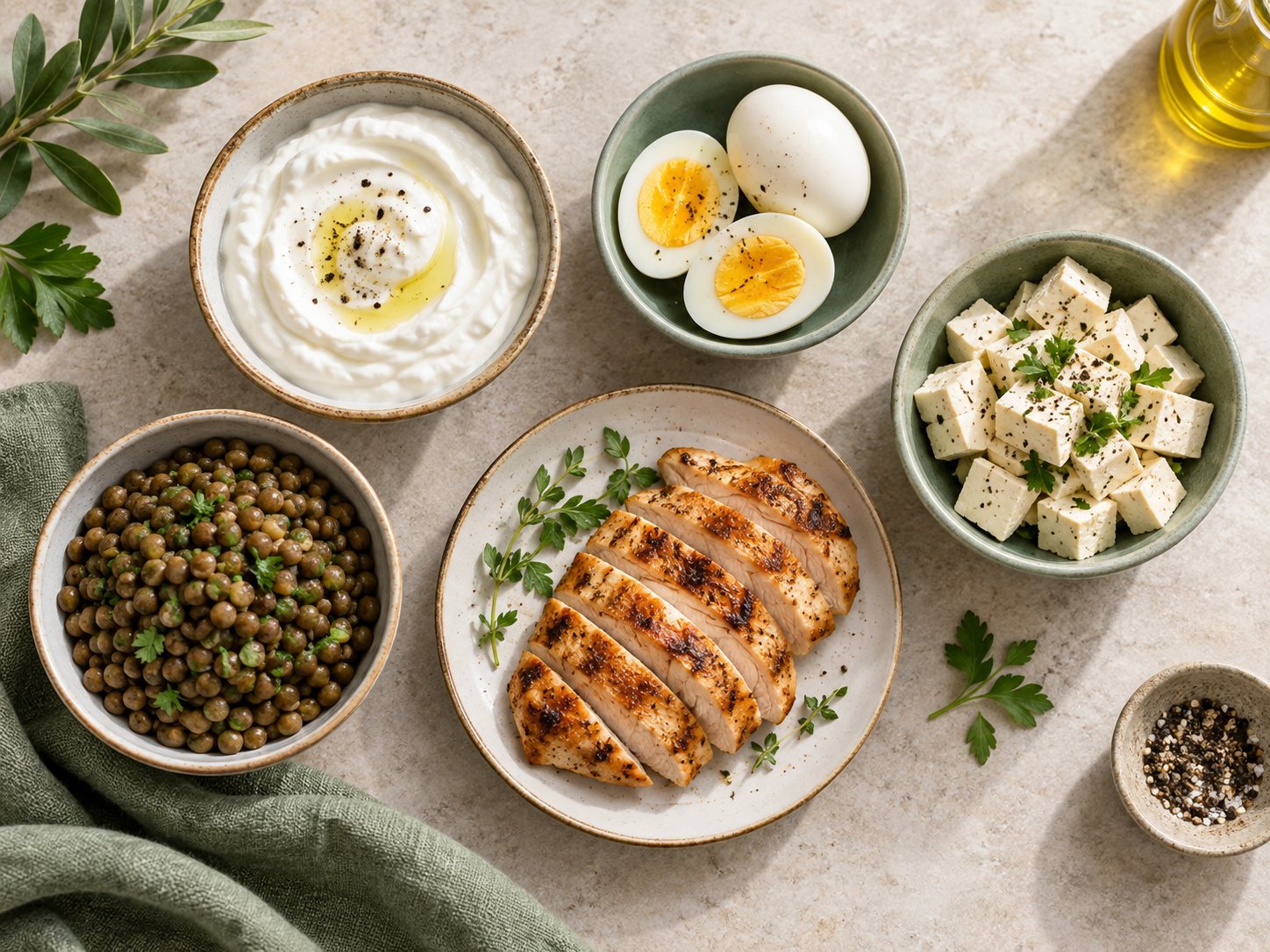
A practical example is about 25–30 grams at a main meal, adjusted to your daily goal and appetite. Combine eggs with yogurt, fish with rice and vegetables, or tofu with lentils. If a full meal feels too large, split it into two smaller eating occasions.
Start with a small serving, eat slowly and stop before overfullness. Avoid relying only on protein drinks; vegetables, fruit, whole grains and healthy fats also provide needed nutrients.
- Start meals with the protein-rich food when appetite is strongest.
- Use smaller portions more often if a full meal feels uncomfortable.
- Choose protein-dense foods that provide meaningful protein without requiring a large volume of food.
- Pair protein with vegetables, fruit, whole grains or other tolerated fiber-rich foods for overall diet quality.
- If intake is consistently very low, discuss a nutritionally complete supplement or protein supplement with your care team.
High-protein foods that may work well on GLP-1 therapy
Estimates vary by brand and preparation. Use package labels for your actual serving.
| Food | Example portion | Approximate protein |
|---|---|---|
| Plain Greek yogurt | 170–200 g | 15–20 g |
| Eggs | 2 large | 12–13 g |
| Cooked chicken or fish | 3 oz / 85 g | 20–26 g |
| Firm tofu | 150 g | 15–22 g; brand varies |
| Cooked lentils | 1 cup | About 18 g |
| Cottage cheese | Half a cup | About 12–14 g |
| Food | Why it can work | Easy use |
|---|---|---|
| Greek yogurt or skyr | High protein in a relatively small portion | Breakfast or snack with berries |
| Eggs | Soft texture and easy portion control | Eggs with toast or vegetables |
| Cottage cheese | Protein-dense and easy to eat slowly | Pair with fruit or tomatoes |
| Chicken, turkey or fish | Lean, high-quality protein | Small portion with vegetables and rice |
| Tofu, tempeh or edamame | Plant-based protein options | Bowls, stir-fries or snacks |
| Beans and lentils | Protein plus fiber | Soups or small grain bowls |
| Milk or fortified soy milk | Adds protein and fluid | Smoothies or oatmeal |
What if your appetite is too low for protein?
Try a small yogurt bowl, cottage cheese on toast, soft tofu with rice, an egg with soup, or flaked fish with a small potato. During nausea, choose mild, lower-fat options you tolerate.
A supplement may be useful when food is insufficient, but discuss its ingredients and suitability. Persistent low intake or weakness needs clinical review.
Low appetite is common, especially after starting treatment or increasing a dose. Try smaller meals, softer foods, and protein-containing snacks rather than waiting for one large dinner. A smoothie made with milk or fortified soy milk and yogurt may be easier for some people than a large solid meal. Avoid turning every drink into a high-calorie shake unless it fits your overall nutrition plan.
Protein shakes: useful or necessary?
Protein shakes can be convenient when food intake is limited, but they are not automatically required. Food-first choices provide a broader mix of nutrients. If you use a shake, look at total protein, added sugar, calories, and whether the product replaces food so often that vegetables, fruit, whole grains, and healthy fats disappear from your diet.
Protein and nausea
If rich protein foods feel uncomfortable, try a smaller portion of a mild, lower-fat option you tolerate. Repeated vomiting or inability to maintain intake needs clinical advice.
Protein and constipation
Make room for fiber-containing foods and fluids alongside protein. A protein-focused eating pattern should not crowd out the rest of your nutrition.
Protein is only half of the muscle-preservation strategy
Adequate protein works alongside resistance activity and adequate overall energy. Track strength and daily function as well as weight. Protein targets should be reassessed if kidney health or appetite changes.
Protein works alongside sufficient overall nutrition and resistance exercise. For strength, body-composition changes, and monitoring, use the dedicated muscle guide.
When to ask for individualized help
- You are eating very little for several days or regularly skipping most meals.
- You are losing weight very rapidly and feel weak, dizzy, or unusually fatigued.
- You have kidney disease, heart failure, or another condition that changes protein or fluid recommendations.
- Nausea, vomiting, constipation, or diarrhea is preventing adequate intake.
- You are an older adult, have low muscle mass, or have difficulty performing normal daily activities.
Frequently asked questions
Should I eat protein first on a GLP-1?
For many people, starting a meal with protein is a practical way to make sure it is consumed before fullness develops. It is not a strict rule, and overall dietary quality still matters.
Can I eat too much protein?
Yes. More is not always better, and very high intakes can crowd out other foods. People with kidney disease or other relevant conditions need individualized advice.
Is plant protein okay?
Yes. Soy foods, beans, lentils, peas, nuts, seeds and other plant foods can contribute meaningful protein. Combining varied sources across the day supports overall nutrition.
Can I meet my target with plant foods?
Yes, with suitable portions and variety. Tofu, soy foods, beans and lentils can contribute; check labels and spread intake through the day.
Do I need 100 grams every day?
Not necessarily. The appropriate target depends on body size, weight basis, age, kidney health and overall intake. Ask your clinician or dietitian.
Bring your questions to your care team
Discuss symptoms, nutrition, and treatment tolerance with a licensed clinician. Medication changes should be made with your prescriber.
Explore weight loss care →Sources & medical information
This guide provides general education, not an individualized nutrition plan or medical advice. Protein, fluid, and activity needs vary. Seek medical care for severe or persistent symptoms, and speak with your clinician before changing treatment.
Learn about our editorial policy and medical review process.