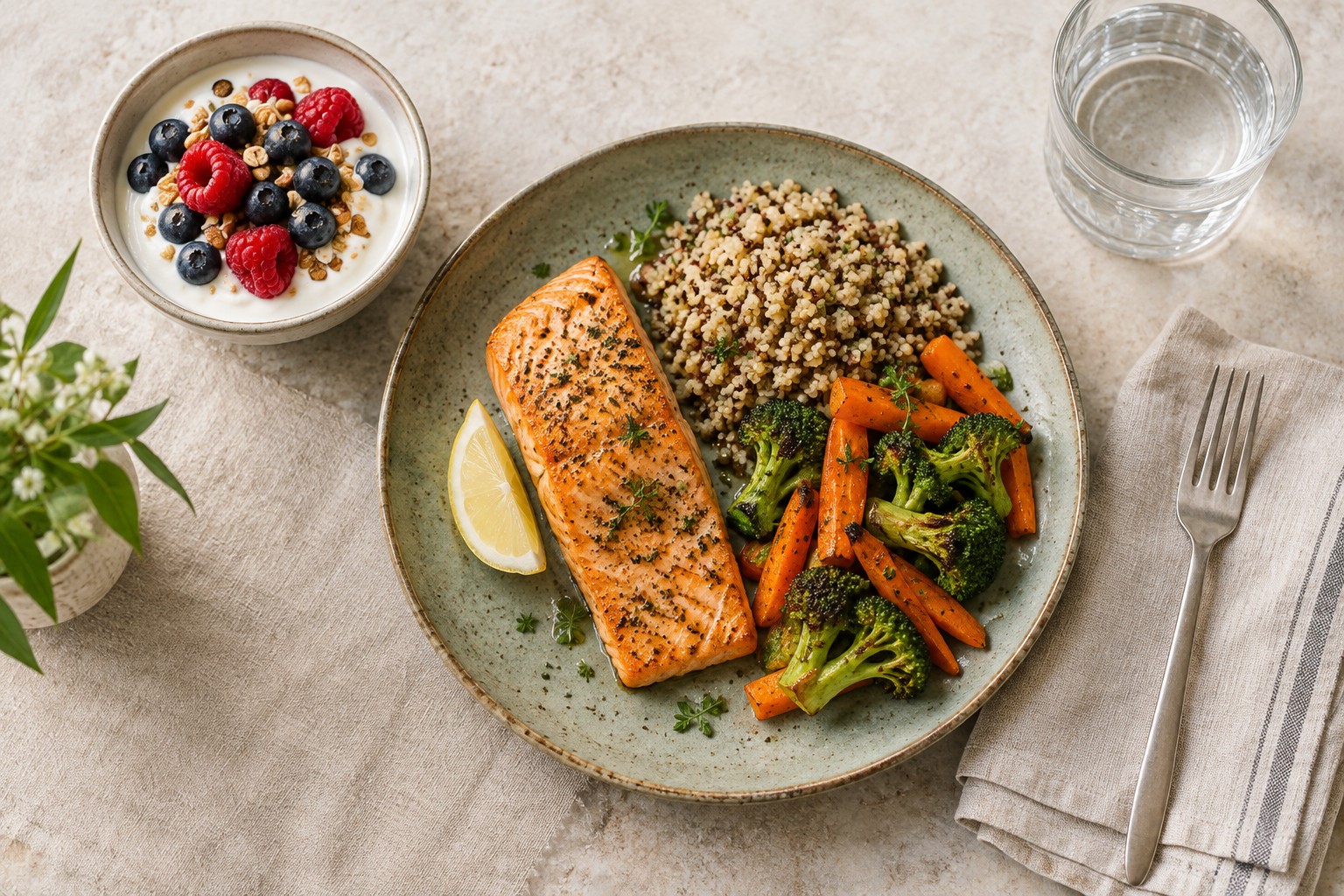
A GLP-1 meal plan should prioritize nutrient-dense foods in portions you can comfortably tolerate. Protein-rich foods, vegetables and fruit, fiber-containing carbohydrates, healthy fats, and adequate fluids can form the foundation. Because GLP-1 medications may reduce appetite and cause gastrointestinal symptoms, some people do better with smaller meals and flexible substitutions rather than forcing large portions.
Starting a GLP-1 medication can change not only how hungry you feel, but also how much food feels comfortable at one time. That can make meal planning surprisingly difficult.
A useful GLP-1 diet plan should not simply be a low-calorie menu. It should help you make the most of a smaller appetite by prioritizing nutrition, hydration, protein, fiber, and foods you tolerate well.
This sample 7-day GLP-1 meal plan is designed as an educational framework, not a prescription. Calorie, protein, carbohydrate, sodium, and fluid needs vary considerably based on body size, age, activity, medical conditions, medications, and treatment goals.
If you have diabetes, kidney disease, food allergies, pregnancy, a history of an eating disorder, or other conditions affecting nutrition, ask your healthcare provider or registered dietitian to individualize your plan.
How to use this GLP-1 meal plan
- Eat slowly and stop when comfortably full rather than trying to finish a predetermined portion.
- Prioritize protein and other nutrient-dense foods when your appetite is small.
- Use the smaller-portion alternative when a full meal feels like too much.
- Drink fluids regularly throughout the day, unless your healthcare team has given you a fluid restriction.
- Adjust fiber, fat, spice, and portion size according to your symptoms and tolerance.
- Treat snacks as optional. If you are not hungry, you do not need to eat simply because a snack appears on the plan.
- Do not use this sample plan as a substitute for individualized diabetes medication or nutrition instructions.
What should a GLP-1 meal include?
A simple way to build a meal is to combine a protein source with vegetables or fruit, an appropriate portion of a fiber-containing carbohydrate, and a small amount of healthy fat when tolerated.
Protein
Eggs, fish, chicken, turkey, Greek yogurt, cottage cheese, tofu, beans, lentils
Helps support nutritional needs and lean body mass during weight loss.Vegetables/Fruit
Leafy greens, broccoli, carrots, peppers, berries, apples, melon
Provide vitamins, minerals, fiber, water, and phytonutrients.Fiber-containing carbohydrate
Oats, quinoa, brown rice, whole-grain bread, beans, lentils
Can provide energy, nutrients, and fiber; tolerance may vary with GI symptoms.Healthy fat
Olive oil, avocado, nuts, seeds, fatty fish
Provides essential fats and helps build a balanced eating pattern; portions may need to be smaller if high-fat foods worsen symptoms.Fluids
Water and other appropriate unsweetened beverages
Hydration is especially important when appetite is reduced or GI symptoms occur.Your 7-day GLP-1 meal plan
Start with any day. Swap meals to suit your routine, and choose portions you can comfortably tolerate. Snacks are optional.
Portions and calorie needs are individual. This sample menu is an educational starting point, not a prescribed intake.
Open printable meal-plan table or save as PDF · Download 7-day table (CSV)
A fresh start
Balanced meals. Flexible portions.Greek yogurt topped with berries and a small amount of oats or chia seeds.
Grilled chicken bowl with cooked vegetables and a modest portion of quinoa or brown rice.
Baked salmon with roasted vegetables and a small potato or other tolerated whole-food carbohydrate.
fruit with a small serving of cottage cheese or yogurt.
Greek yogurt with berries for breakfast; a smaller chicken-and-vegetable bowl for lunch; half the usual salmon portion with cooked vegetables for dinner.
Simple & satisfying
Balanced meals. Flexible portions.Eggs with whole-grain toast and fruit.
Turkey or tofu wrap with vegetables; choose a portion you can comfortably tolerate.
Chicken or tofu stir-fry with cooked vegetables and a modest portion of rice.
apple with a small amount of nut butter, if tolerated.
one egg with toast; half a wrap; a small bowl of chicken/tofu with rice and cooked vegetables.
Plant-friendly variety
Balanced meals. Flexible portions.Oatmeal with Greek yogurt or another protein-rich accompaniment and berries.
Lentil or bean soup with vegetables and a protein-rich side if needed.
Grilled fish or tofu with quinoa and cooked greens.
Greek yogurt or a piece of fruit.
a smaller bowl of oatmeal with yogurt; a cup of lentil soup; a small serving of fish/tofu with cooked greens.
Comfort & balance
Balanced meals. Flexible portions.Cottage cheese with fruit and a small amount of nuts or seeds, if tolerated.
Chicken, tuna, tofu, or bean salad with vegetables and whole-grain crackers or bread.
Turkey meatballs, lean meatballs, or plant-based alternative with cooked vegetables and a small serving of whole-grain pasta.
vegetables with hummus or yogurt dip.
cottage cheese and fruit; a small protein-and-vegetable salad; a few meatballs with cooked vegetables.
Color on your plate
Balanced meals. Flexible portions.Egg and vegetable scramble with fruit.
Quinoa bowl with chicken, tofu, or beans plus vegetables.
Baked chicken or tofu with sweet potato and green vegetables.
yogurt, fruit, or a small handful of nuts if tolerated.
one egg with cooked vegetables; a half-size quinoa bowl; a small portion of chicken/tofu with sweet potato.
Keep it flexible
Balanced meals. Flexible portions.Greek yogurt with banana slices and a small amount of oats.
Tuna, salmon, chickpea, or tofu bowl with vegetables and a modest whole-grain serving.
Lean turkey, chicken, fish, tofu, or bean tacos with vegetables; choose soft, smaller portions if preferred.
cottage cheese with fruit.
yogurt and banana; a small protein bowl; one taco with protein and vegetables.
A week of nourishment
Balanced meals. Flexible portions.Oatmeal with fruit plus eggs, yogurt, or another tolerated protein source.
Vegetable soup with chicken, beans, lentils, or tofu.
Grilled fish, chicken, tofu, or beans with roasted vegetables and quinoa or brown rice.
fruit and yogurt or another small protein-rich snack.
a small oatmeal-and-protein breakfast; one cup of soup; a smaller protein portion with cooked vegetables.
Easy meal substitutions
A plan should work with your preferences and tolerance. Try these simple switches.
| Instead of | Consider |
|---|---|
| Chicken | Turkey, fish, tofu, tempeh, beans, lentils, eggs |
| Greek yogurt | Cottage cheese or a suitable fortified alternative |
| Brown rice | Quinoa, barley, whole-grain pasta, potato, sweet potato |
| Raw vegetables | Cooked vegetables if raw produce feels difficult to tolerate |
| Large salad | Smaller salad or cooked vegetables |
| Nuts/seeds | Smaller portions or omit if fat worsens symptoms |
| Spicy sauce | Milder herbs, lemon, or a tolerated sauce |
| Large meal | Half portion now; save the rest for later if appropriate |
What if eating feels uncomfortable?
For more food swaps and guidance on personal triggers, explore GLP-1 Foods to Avoid: What to Eat and What to Limit.
What If You Feel Nauseated?
If nausea occurs, a full meal plan may temporarily be unrealistic. Smaller, simpler meals may be easier to tolerate. Avoid forcing large portions, and consider limiting greasy or very high-fat foods if they worsen symptoms.
Eat smaller amounts at a time.
Eat slowly.
Choose relatively bland foods when needed.
Maintain hydration.
Use cooked or simpler foods if they feel easier to tolerate.
Contact your healthcare provider if nausea is persistent, severe, or prevents adequate food or fluid intake.
What If You Are Constipated?
Adequate fluids, regular movement when appropriate, and gradually increasing tolerated fiber-containing foods may help. Examples include fruit, vegetables, oats, beans, lentils, and whole grains. Increasing fiber too rapidly without enough fluid may worsen discomfort for some people.
Persistent or severe constipation should be discussed with your healthcare provider.
What If You Have Diarrhea?
During active diarrhea, temporarily simplifying meals and reducing foods that worsen symptoms may be more comfortable. Some people tolerate rice, broth, cooked vegetables, lean protein, and softer foods better. Hydration is particularly important.
Persistent diarrhea, signs of dehydration, or difficulty keeping fluids down should prompt medical advice.
How much protein should you eat on a GLP-1?
Protein is an important consideration during weight loss because some lean mass can be lost along with body fat. A meal plan can therefore prioritize a source of protein at meals and, when useful, snacks.
However, this article intentionally does not prescribe a universal number of grams per day. Appropriate protein intake depends on body size, age, activity, kidney function, medical conditions, overall energy intake, and other factors. Your dietitian can add an individualized target after review if appropriate.
Explore protein targets and practical food choices →
Do you need to count calories?
Not everyone taking a GLP-1 needs to count calories. Some people find tracking useful, while others do better focusing on meal quality, portion awareness, hunger and fullness cues, protein, fiber, and hydration.
Because GLP-1 medications can significantly reduce appetite, extremely restrictive calorie targets may increase the risk of inadequate nutrition. Individual goals should be set with a qualified healthcare professional when needed.
Your GLP-1 grocery list
Check off what you already have, then shop for the meals you want to try. Selections reset when you refresh this page.
Meal-prep tips for GLP-1 users
- Cook protein in small portions that can be refrigerated or frozen.
- Keep easy-to-tolerate foods available for days when appetite is lower.
- Pre-portion large restaurant or takeout meals before you begin eating.
- Prepare cooked vegetables as an alternative to raw salads.
- Keep water accessible throughout the day.
- Use leftovers intentionally so smaller portions do not create unnecessary food waste.
- Keep a simple food-and-symptom record if you are trying to identify personal trigger foods.
Common meal-planning mistakes
- Eating too little simply because appetite is low.
- Skipping protein-rich foods and filling a small appetite with low-nutrient snacks.
- Forcing large meals despite feeling full.
- Assuming every person needs the same high-protein or low-carbohydrate diet.
- Increasing fiber aggressively while not drinking enough.
- Treating every food as either 'good' or 'bad' rather than learning personal tolerance.
- Ignoring persistent nausea, vomiting, diarrhea, constipation, or dehydration.
- Changing a prescribed GLP-1 dose without discussing symptoms with the prescribing clinician.
Frequently asked questions
What is a good meal plan for someone on a GLP-1?
A useful plan emphasizes nutrient-dense foods, a source of protein at meals, vegetables and fruit, appropriate fiber-containing carbohydrates, healthy fats in tolerated portions, and adequate hydration. Portions should reflect your appetite and individual nutritional needs.
Should I eat three meals a day on a GLP-1?
There is no universal meal frequency that is best for everyone. Some people tolerate three smaller meals, while others may use smaller meals and an optional snack. Your diabetes medications, symptoms, and nutritional needs may affect meal timing.
What should I eat for breakfast on a GLP-1?
Examples include eggs with fruit, Greek yogurt with berries, oatmeal paired with a protein source, or cottage cheese with fruit. Choose portions you can comfortably tolerate.
What should I eat for lunch on a GLP-1?
A lunch can combine lean protein or a plant-based protein with vegetables and an appropriate portion of whole grains, beans, or another fiber-containing carbohydrate.
What should I eat for dinner on a GLP-1?
Examples include fish, chicken, tofu, beans, or lentils with cooked vegetables and a modest portion of a whole-food carbohydrate such as quinoa, brown rice, potato, or sweet potato.
Can I follow a GLP-1 meal plan if I have diabetes?
Possibly, but diabetes medications and glucose patterns can change what is appropriate. People using insulin or other glucose-lowering medications should follow individualized advice from their healthcare team rather than relying solely on a generic meal plan.
Can I use this meal plan with semaglutide?
The general nutrition principles may be relevant to people prescribed semaglutide, but individual needs and side effects vary. Follow your prescriber's and dietitian's recommendations.
Can I use this meal plan with tirzepatide?
The same general principle applies: nutrient-dense foods, adequate nutrition, and symptom-aware portions may be useful, but your treatment plan should be individualized.
Do I need snacks while taking a GLP-1?
Not necessarily. Snacks in this plan are optional. They may be useful when a smaller meal makes it difficult to meet nutritional needs, but eating when you are not hungry simply because a snack is scheduled is not required.
What if I cannot finish the meals in this plan?
Do not force yourself to finish a large portion. Use the smaller-portion alternatives and prioritize nutrient-dense foods. If you consistently cannot eat enough or are struggling with hydration, contact your healthcare provider.
When to contact your healthcare provider
- Repeated or persistent vomiting
- Inability to keep fluids down
- Signs of dehydration
- Severe or persistent abdominal pain
- Severe or persistent diarrhea
- Significant or worsening constipation
- Difficulty meeting basic nutritional needs
- Unexpected weakness or other concerning symptoms
Do not change your prescribed GLP-1 dose on your own because of side effects.
Considering GLP-1 weight loss treatment?
Talk with a licensed healthcare provider about your medical history, eligibility, and a treatment plan that fits your needs.
Explore your care options →GLP-1 medications are not appropriate for everyone. Evaluation does not guarantee a prescription.Medical disclaimer & references
This sample meal plan is for educational purposes only and is not individualized medical nutrition therapy. Nutritional needs vary based on medical conditions, medications, allergies, kidney function, diabetes treatment, pregnancy status, body size, activity, and other factors. Talk with your healthcare provider or registered dietitian before making significant dietary changes, especially if you have a chronic medical condition.
Educational content updated October 1, 2026. Medically reviewed by Dr. Fremlin Dekyi, MD. Reviewed: October 1, 2026.
Use portions that match your appetite
Begin with a smaller serving, such as 2–3 ounces of cooked fish or chicken, a small scoop of rice and cooked vegetables. Add more if comfortable; this is a starting portion, not an intake ceiling. Smaller repeated meals can be easier than one large plate.
Set a protein goal before planning the week
A clinician may consider roughly 1.2–1.6 grams per kilogram daily during weight reduction using an appropriate reference weight. A 70 kg reference weight gives an illustrative 84–112 grams per day; kidney disease and other conditions may require a different target.
Use food labels and portions to estimate protein. Spread your individualized goal across meals and optional snacks; a day made only of toast and crackers is unlikely to meet nutrition needs.
Nausea-friendly substitutions
Swap a fatty or strongly scented meal for rice with soft tofu, a small yogurt bowl, an egg with toast or broth with a little chicken. Choose mild foods and sip fluids regularly. Return to a more varied diet as tolerance improves.
If vomiting persists or you cannot maintain food and fluid intake, contact your clinician. Do not treat severe pain or dehydration as a meal-planning problem.
More questions about your care
Is this a prescribed calorie plan?
No. It is an educational menu with flexible portions. Your energy and protein needs should be individualized.
Can I use it with either semaglutide or tirzepatide?
The food ideas can apply to either treatment, but your symptoms, medical conditions and care plan determine which choices are appropriate.