The quick answer
Reduced food intake, lower fluid intake and changes in digestive movement can contribute to constipation during GLP-1 treatment. Hard stools, straining and a change from your usual pattern matter alongside how often you go.
Why constipation can happen on GLP-1 therapy
Reduced food intake, lower fluid intake and changes in digestive movement can contribute to constipation during GLP-1 treatment. Hard stools, straining and a change from your usual pattern matter alongside how often you go.
GLP-1-based therapies can reduce appetite and slow gastrointestinal movement. When people eat less, they also produce less stool bulk. Feeling full can also lead some people to drink less. Together, lower food volume, inadequate fluids, and changes in gut motility can make bowel movements less frequent or harder to pass.
A practical constipation plan
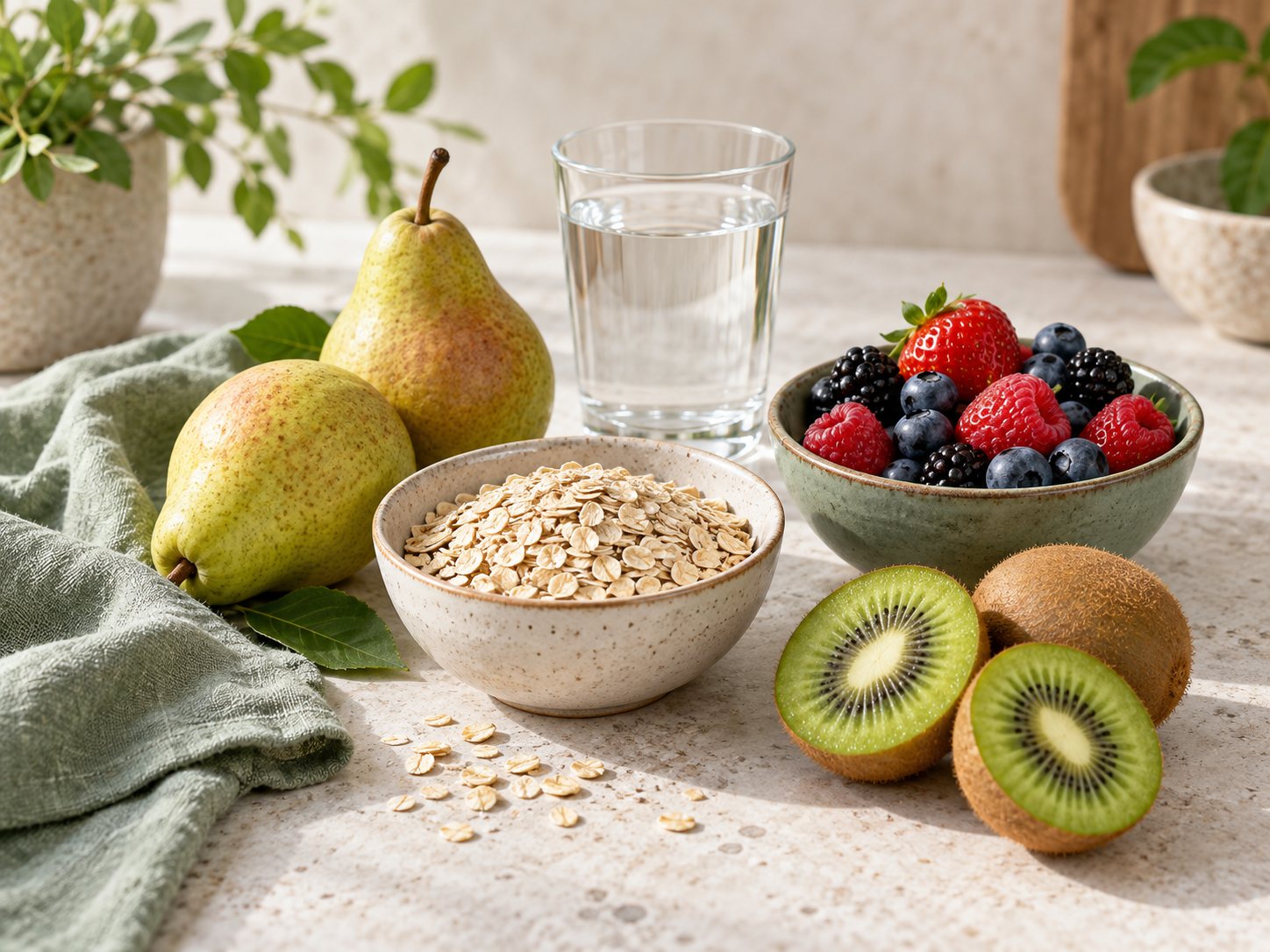
Add fiber gradually using oats, cooked vegetables, pears, kiwi, beans or lentils as tolerated. Large sudden increases can worsen gas and bloating. Drink regularly unless your clinician has prescribed a fluid restriction.
Short walks and regular activity can help; try an unhurried toilet routine after a meal and avoid repeatedly ignoring the urge. Very low food intake can reduce stool volume, so review nutrition as well as symptoms.
Check your fluid intake. Sip regularly through the day unless you have been told to restrict fluids.
Increase fiber gradually, not all at once. A sudden large increase can worsen gas and bloating.
Use a mix of fiber sources. Fruit, vegetables, oats, beans, lentils, whole grains, chia or flax may help when tolerated.
Move your body. Walking and regular physical activity can support bowel regularity.
Respond to the urge to have a bowel movement rather than repeatedly delaying it.
Review other medicines and supplements with your clinician or pharmacist because some can contribute to constipation.
Contact your care team if dietary measures are not enough rather than repeatedly self-treating severe symptoms.
Fiber-rich foods to try
| Food | Fiber benefit | Practical GLP-1 use |
|---|---|---|
| Kiwi, pears, berries, prunes | Fruit fiber plus water | Small serving as a snack |
| Oats | Soluble fiber | Breakfast with yogurt or milk |
| Beans and lentils | Soluble + insoluble fiber | Start with small portions if bloating |
| Vegetables | Fiber, water, micronutrients | Cooked vegetables may be easier to tolerate |
| Whole grains | Adds stool bulk | Choose modest portions |
| Chia or ground flax | Concentrated fiber | Add gradually and take with adequate fluid |
Why 'more fiber' is not always the immediate answer
If you are already significantly constipated, bloated, or drinking too little, suddenly adding large amounts of fiber can make discomfort worse. Increase fiber gradually and pair it with appropriate fluids. If you have severe pain, vomiting, marked distension, or cannot pass gas, do not simply keep adding fiber—seek medical evaluation.
How much should you drink?
Fluid needs are individual. Sip regularly and follow your care team's advice, especially if you have a fluid restriction. A single water target is not suitable for everyone. The hydration guide explains drink choices and how to discuss an appropriate amount.
Do laxatives or stool softeners help?
Ask a pharmacist or clinician whether an osmotic laxative such as polyethylene glycol is suitable. Choice and duration depend on symptoms, other medicines and kidney health. Do not repeatedly add laxatives without review or stop prescribed treatment yourself.
Some people need more than food and fluid changes. Clinical guidance discusses options such as fiber supplements, stool softeners, magnesium preparations, or osmotic agents in appropriate patients. These products are not interchangeable and may be unsafe with certain medical conditions or medications. Ask a clinician or pharmacist what is appropriate for you, especially if constipation is persistent.
When to contact a clinician urgently
Seek urgent assessment for severe abdominal pain, vomiting, pronounced bloating or inability to pass gas. Blood in the stool, black stool, fever or a persistent new bowel change also needs prompt evaluation. Do not add bulk fiber when obstruction is a concern.
- Severe or worsening abdominal pain.
- Persistent vomiting or inability to keep fluids down.
- Marked abdominal swelling or tenderness.
- Inability to pass stool or gas, particularly with pain or vomiting.
- Blood in the stool or black, tarry stool.
- Constipation lasting several days with significant discomfort or not responding to reasonable self-care.
Frequently asked questions
Is constipation common with semaglutide and tirzepatide?
Yes. Constipation is a recognized gastrointestinal adverse effect with GLP-1-based therapies, although rates vary by medication, dose, study, and population.
Can eating less cause fewer bowel movements?
Yes. Less food means less material moving through the gastrointestinal tract, so bowel frequency may decrease even without severe constipation.
Should I take a fiber supplement every day?
Not automatically. Food sources are useful, and supplements may help some people, but the type and dose should fit your symptoms, fluid intake, medications, and health conditions.
Can constipation improve over time?
It may, but constipation can persist longer than nausea for some people. Persistent symptoms deserve active management rather than being ignored.
Should I take a fiber supplement?
It may help some people, but requires appropriate fluid intake and gradual introduction. Discuss swallowing problems, fluid restrictions or severe bloating first.
When should I contact my clinician?
Contact them if symptoms persist, worsen or interfere with eating. Severe pain, vomiting or inability to pass gas needs urgent care.
Bring your questions to your care team
Discuss symptoms, nutrition, and treatment tolerance with a licensed clinician. Medication changes should be made with your prescriber.
Explore weight loss care →Sources & medical information
This guide provides general education, not an individualized nutrition plan or medical advice. Protein, fluid, and activity needs vary. Seek medical care for severe or persistent symptoms, and speak with your clinician before changing treatment.
- Joint clinical advisory: nutritional priorities during GLP-1 therapy
- Wegovy prescribing information
- Zepbound prescribing information
Learn about our editorial policy and medical review process.