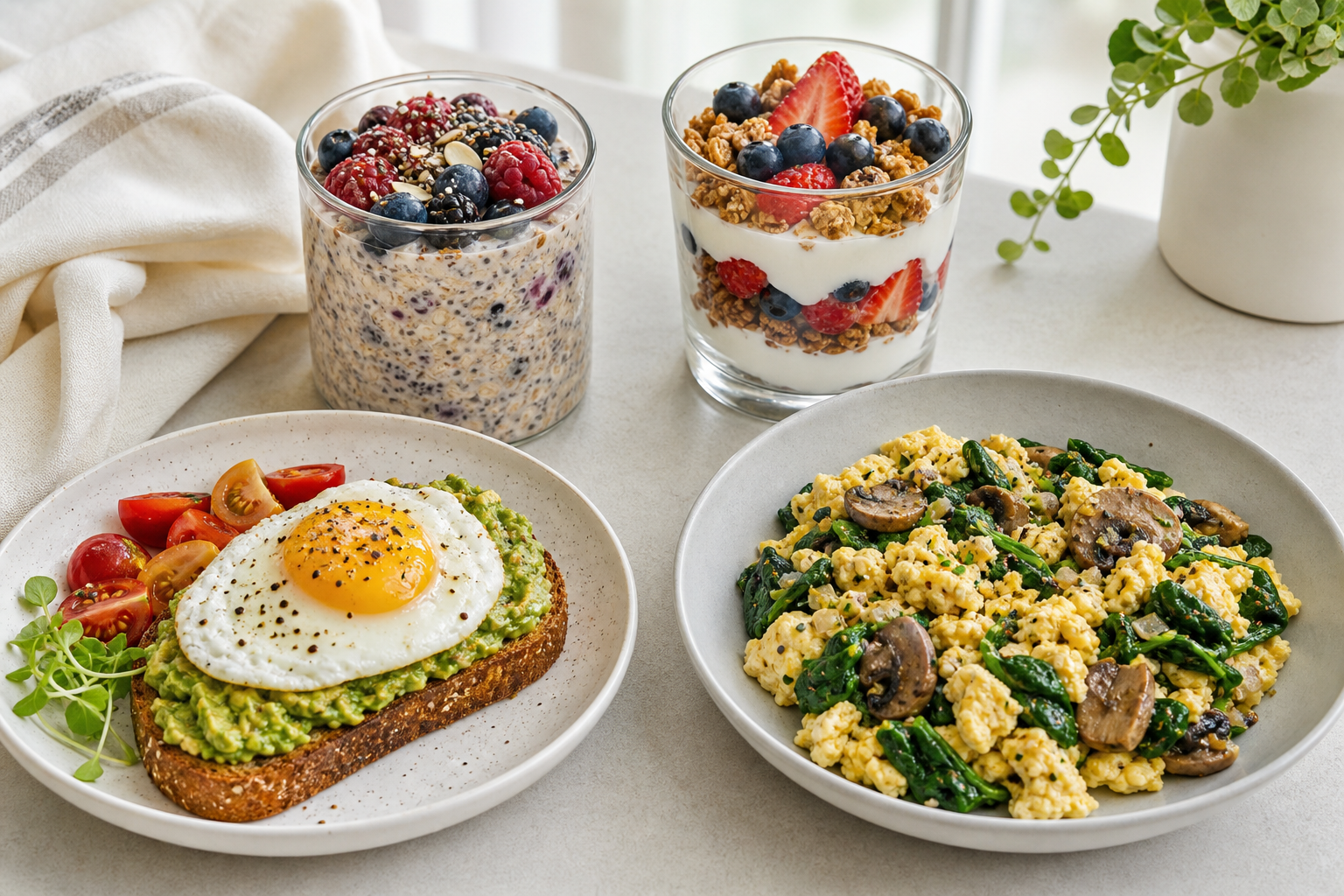
Six breakfast combinations with estimated protein
Protein figures are approximate ingredient-based planning estimates. Brands, portion weights, and recipes vary; check package labels for your actual meal. The USDA protein reference table provides ingredient examples, not an analysis of these complete meals. Times assume ingredients are ready. These examples are not laboratory nutrient analyses or a prescribed protein target.
| Meal and portion | Estimated protein | Prep | Practical adaptation |
|---|---|---|---|
| 170 g plain Greek yogurt + 1/2 cup berries | 15–19 g | 2 minutes | Start with half the yogurt if appetite is low |
| 2 large eggs + 1 slice whole-grain toast | 15–17 g | 8–10 minutes | Use one egg and save the other for later |
| 1/2 cup cottage cheese + 1/2 cup sliced fruit | 12–15 g | 2 minutes | Choose a texture and portion you tolerate |
| 1/2 cup dry oats cooked with 1 cup milk | 12–14 g | 5–8 minutes | Make a smaller bowl; use lactose-free milk if suitable |
| 150 g firm tofu scramble + 1 slice toast | 16–25 g | 10 minutes | Tofu protein varies substantially by brand; check the label |
| 170 g Greek yogurt + 1/4 cup dry oats + 1/2 banana | 18–22 g | 3 minutes plus chilling | Keep toppings modest if the meal feels too bulky |
Build around a food you tolerate
Start with a protein-containing food, then add a grain, fruit, or other component that fits your preferences and tolerance. Eggs, soy foods, dairy, and other options can make breakfast practical. The USDA protein-food guidance explains food-group variety; it does not prescribe these meal amounts.
A large “high-protein” meal is not automatically better if it causes discomfort. Use the protein guide to discuss your overall needs, especially with kidney disease or other restrictions. Dairy-free alternatives differ: many almond or oat drinks contain much less protein than milk, while fortified soy products may be closer. Read the label rather than assuming equivalence.
When appetite is low or nausea is present
Try a smaller comfortable serving and plan another eating opportunity later rather than forcing a large breakfast. A meal can be split without making it nutritionally complete for the day. Cold or plain options may be easier for some people, but tolerance varies.
If greasy, heavily spiced, or very sweet meals worsen symptoms, change the portion or ingredients. See the food-tolerance guide and nausea guidance. Difficulty maintaining intake, repeated vomiting, or weakness needs clinical advice, not only a new recipe.
Make breakfast easier to repeat
- Keep two quick options available, such as yogurt and eggs.
- Prepare components ahead and follow safe refrigeration and food handling.
- Keep recipe portions measurable if you want a more accurate protein estimate.
- Choose affordable alternatives you enjoy; protein powders are not required.
- Use the meal plan to connect breakfast with lunch, dinner, and snacks.
For oral medication, follow its fasting and waiting instructions before breakfast; see medication timing. If you use insulin or a sulfonylurea and intake is reduced, discuss your glucose plan with your diabetes clinician rather than routinely skipping meals.
Frequently asked questions
How much protein should breakfast contain?
There is no single GLP-1 breakfast target. Consider overall daily needs, appetite, and medical conditions with your clinician or dietitian.
Can I skip breakfast if I am not hungry?
Your eating pattern should still meet nutrition needs and medication instructions. Discuss persistent low intake; glucose-lowering combinations may require particular planning.
Are smoothies always a good choice?
Not always. Ingredients, volume, sugar, and tolerance matter. They are an option rather than a required meal replacement.
Are these protein counts exact?
No. They are approximate ranges for the specified portions. Check the labels and amounts of your own ingredients for a closer estimate.
References and editorial information
- Joint nutritional advisory for GLP-1 therapy
- USDA MyPlate: protein foods
- USDA: protein content of selected foods
This educational article does not replace diagnosis, product instructions, or advice from your healthcare professional. Individual treatment decisions require your clinician.
Read our editorial policy and medical review process.